

Byline

Leslie's pede recuperação judicial nos EUA com corte de 90% da dívida

A rede de piscinas americana prevê sair do regime em 2027 com aportes de cerca de R$ 477 milhões

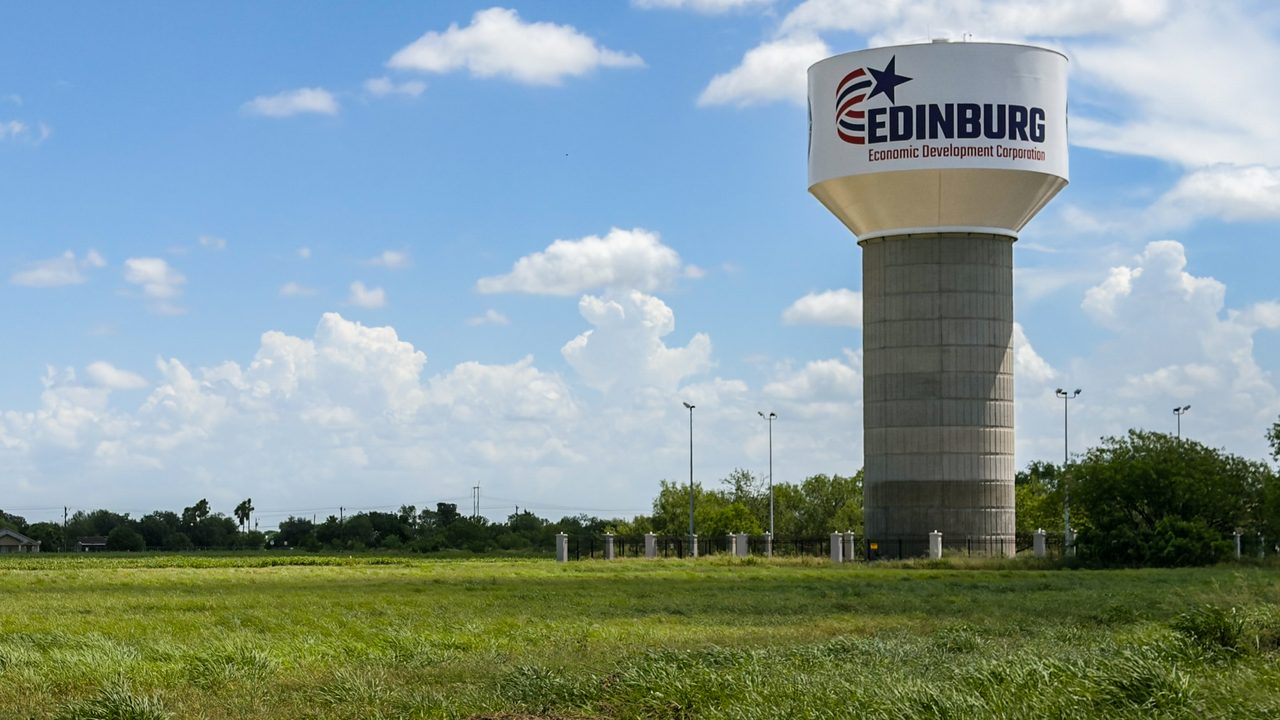
Caixa d'água da Edinburg Economic Development Corporation em meio a uma área verde sob céu nublado.
Foto: U.S. Department of Agriculture
Legenda
Today’s USDA aerial dispersal operations begin with the arrival of Mexico based aircraft with a delivery from Panama of chilled sterile New World Screwworm (NWS) pupae at McAllen International Airport in Mc Allen, Texas, on July 1, 2026. This is part of an international effort to respond to the pest advancing northward. Upon landing, U.S. Customs and Border Protection officers board the aircraft for inspection, and USDA APHIS personnel complete required documentation with the crew. Ice chest coolers containing the sterile pupae are carefully moved from the aircraft to a refrigerated truck for transport to the USDA’s New World Screwworm Dispersal Facility at Moore Air Base in Edinburg, Texas. The shipment is carted into one of the facility’s Cold Rooms, set to 51-degrees, where technicians open each cooler to verify contents, inspect quality, and record temperatures. Pupae are measured into buckets and immediately dyed fluorescent green to identify them as processed at this facility in Texas—a step carried out in a small cement mixer before the material is poured into an auger feeder. The auger dispenses uniform amounts of pupae into the frame channels of the emergence screen trays; a nutrient cube is added to each tray. Tray stacks are capped with ventilation covers and rolled into an Emergence Room, where a vacuum ventilation hose is attached on top. The system pulls air from the bottom upward and up through the tower, maintaining about 81 degrees and 72 percent humidity to promote even emergence. From each batch, a screened grid tray is filled with 100 pupae. With this sampling they can track the emergence rate. Technicians monitor fly development to determine when the insects are ready for dispersal, enabling planners to schedule flight routes and timing. Once a batch reaches target emergence of 94.5%, trays are moved back to the cold room where the flies become dormant. Overnight, personnel in the Cold Room conduct the “knock down” process, tapp

A rede de piscinas Leslie's ingressou em processo de recuperação judicial pré-acordada nos Estados Unidos. O pedido foi feito no tribunal de falências do Distrito Sul do Texas em 30 de setembro.

O plano da empresa prevê reduzir cerca de 90% do seu endividamento, o equivalente a aproximadamente R$ 3,63 bilhões. A meta declarada pela Leslie's é sair do regime de Chapter 11 já no início de 2027.

A companhia fechou 76 de suas unidades, enquanto as demais lojas seguem funcionando normalmente. O processo de reestruturação contempla um financiamento DIP de recursos frescos no valor de cerca de R$ 477 milhões.

Mais R$ 795 milhões virão de um aporte de capital garantido por credores que assinaram o acordo. A Leslie's ainda tem a possibilidade de acessar até R$ 1,19 bilhão em uma segunda linha de financiamento DIP, com lastro em ativos.

Durante a reorganização, a empresa manterá o pagamento de salários e benefícios aos empregados. A rede também cumprirá programas de fidelidade e honrará compromissos com fornecedores, segundo afirmou publicamente o CEO Jason McDonell.

A análise do portfólio imobiliário continua para adequar a malha de lojas às necessidades futuras. Ao final do processo, o grupo de credores que endossou o acordo ficará com a maior parte da propriedade da companhia.

Voltar para Cidades