

Byline

Observatório no Chile inicia mapeamento de 10 anos do céu

Levantamento utiliza a maior câmera digital da astronomia e conta com a participação de pesquisadores brasileiros

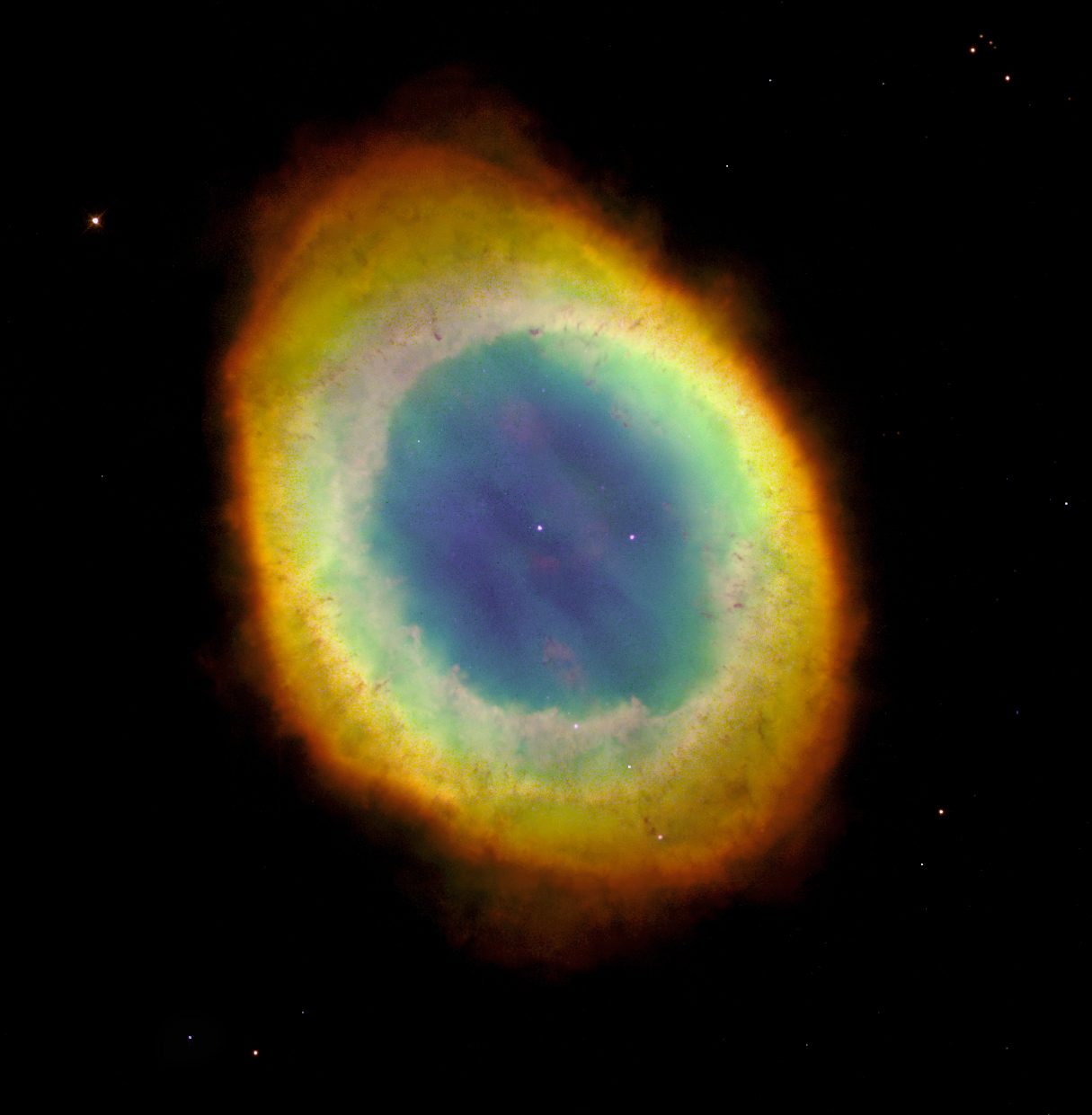
Uma nebulosa planetária em formato oval com cores vibrantes em tons de amarelo, verde e azul contra o fundo preto do espaço sideral.
Foto: NASA on The Commons
Legenda
The NASA Hubble Space Telescope has captured the sharpest view yet of the most famous of all planetary nebulae, the Ring Nebula (M57). In this October 1998 image, the telescope has looked down a barrel of gas cast off by a dying star thousands of years ago. This photo reveals elongated dark clumps of material embedded in the gas at the edge of the nebula; the dying central star floating in a blue haze of hot gas. The nebula is about a light-year in diameter and is located some 2,000 light-years from Earth in the direction of the constellation Lyra. The colors are approximately true colors. The color image was assembled from three black-and-white photos taken through different color filters with the Hubble telescope's Wide Field and Planetary Camera 2. Blue isolates emission from very hot helium, which is located primarily close to the hot central star. Green represents ionized oxygen, which is located farther from the star. Red shows ionized nitrogen, which is radiated from the coolest gas, located farthest from the star. The gradations of color illustrate how the gas glows because it is bathed in ultraviolet radiation from the remnant central star, whose surface temperature is a white-hot 216,000 degrees Fahrenheit (120,000 degrees Celsius).

O Observatório Vera C. Rubin, no Chile, conduz o levantamento astronômico Legacy Survey of Space and Time para monitorar o céu do hemisfério Sul ao longo de dez anos.

Equipado com a maior câmera digital já fabricada para a astronomia, o centro gera centenas de registros por noite. Os dados reunidos formam uma sequência contínua de imagens voltada ao estudo de variações no espaço e à criação de mapas da distribuição de galáxias.

O rastreamento acompanha desde corpos do Sistema Solar até quasares e estruturas em altos desvios para o vermelho, além de registrar fenômenos transientes. As informações coletadas buscam esclarecer a história da evolução cósmica e a atuação da matéria e da energia escura.

O projeto mobiliza oito colaborações científicas globais para processar o volume massivo de dados. Cientistas brasileiros participam do consórcio por meio do Brazilian Participation Group, com atuação direta no grupo Dark Energy Science Collaboration.

As frentes de trabalho desenvolvem métodos para analisar a expansão acelerada do Universo sem modelos prévios de energia escura. As análises combinam o efeito de lenteamento gravitacional fraco em aglomerados de galáxias e correlações com a radiação cósmica de fundo para testar o Modelo Padrão da Cosmologia.

Voltar para Tecnologia