

Byline

Telescópio Gemini North flagra anã branca após detonação estelar

Estrutura a 7.500 anos-luz da Terra exibe feixes gasosos semelhantes a cordões de pérolas

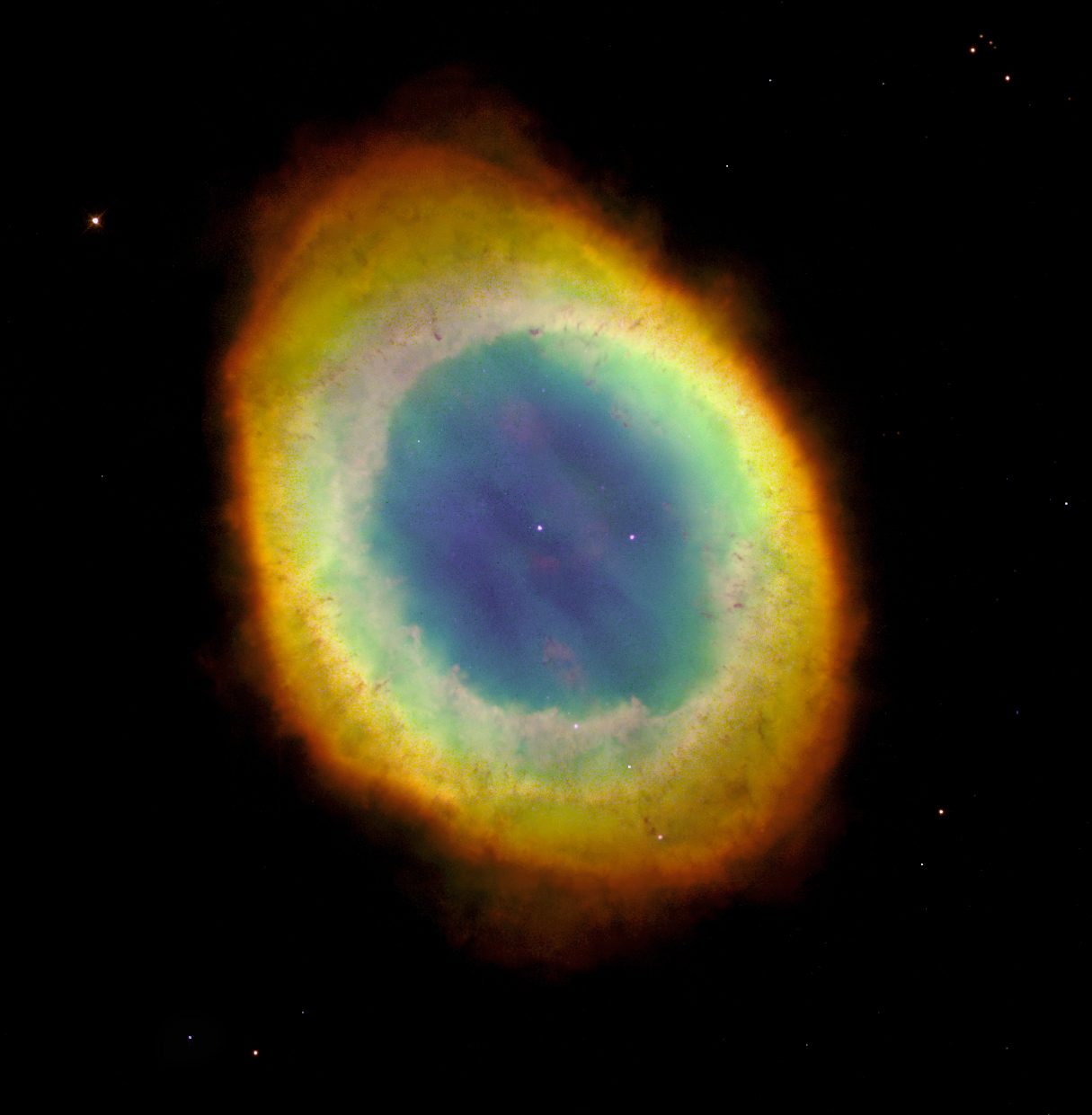
Uma nebulosa planetária em formato oval com cores vibrantes em tons de amarelo, verde e azul contra o fundo preto do espaço sideral.
Foto: NASA on The Commons
Legenda
The NASA Hubble Space Telescope has captured the sharpest view yet of the most famous of all planetary nebulae, the Ring Nebula (M57). In this October 1998 image, the telescope has looked down a barrel of gas cast off by a dying star thousands of years ago. This photo reveals elongated dark clumps of material embedded in the gas at the edge of the nebula; the dying central star floating in a blue haze of hot gas. The nebula is about a light-year in diameter and is located some 2,000 light-years from Earth in the direction of the constellation Lyra. The colors are approximately true colors. The color image was assembled from three black-and-white photos taken through different color filters with the Hubble telescope's Wide Field and Planetary Camera 2. Blue isolates emission from very hot helium, which is located primarily close to the hot central star. Green represents ionized oxygen, which is located farther from the star. Red shows ionized nitrogen, which is radiated from the coolest gas, located farthest from the star. The gradations of color illustrate how the gas glows because it is bathed in ultraviolet radiation from the remnant central star, whose surface temperature is a white-hot 216,000 degrees Fahrenheit (120,000 degrees Celsius).

O telescópio Gemini North registrou no núcleo de uma nebulosa uma anã branca que resistiu a uma detonação estelar.

A estrutura celeste fica a uma distância estimada em 7.500 anos-luz da Terra.

A composição exibe feixes de gás com agrupamentos parecidos com cordões de pérolas, segundo artigo divulgado no periódico científico The Astrophysical Journal.

Voltar para Tecnologia